
Cohoes High School recently hosted its 24th Annual Science Research Symposium on Thursday, June 11, bringing together students, families, friends, teachers, alumni and administrators to celebrate a year of scientific inquiry and research. The event serves as the culmination of the Science Research class, which is part of the University at Albany’s “University in the High School” program.
The evening began in the auditorium with a keynote presentation from Dylan Farnsworth, a senior research scientist with the RNA Institute at the University at Albany. Following his remarks, senior Ethan Beck delivered a presentation before students showcased their projects during a poster session in the main hall, where attendees had the opportunity to learn about the research and interact with the students.
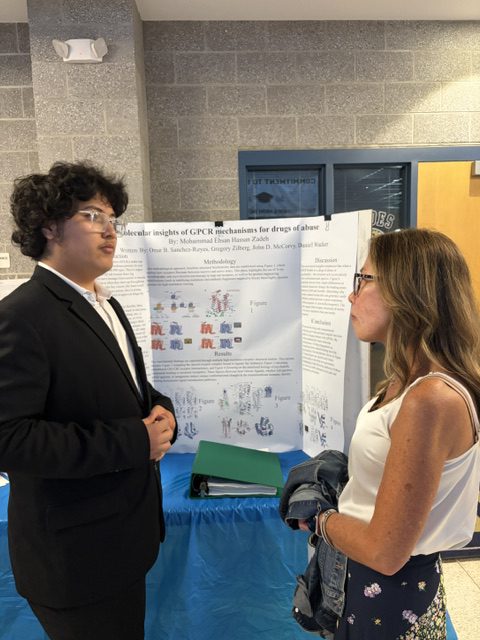
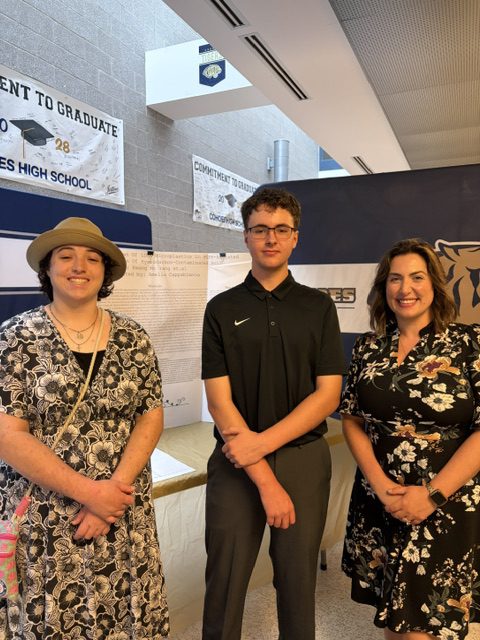
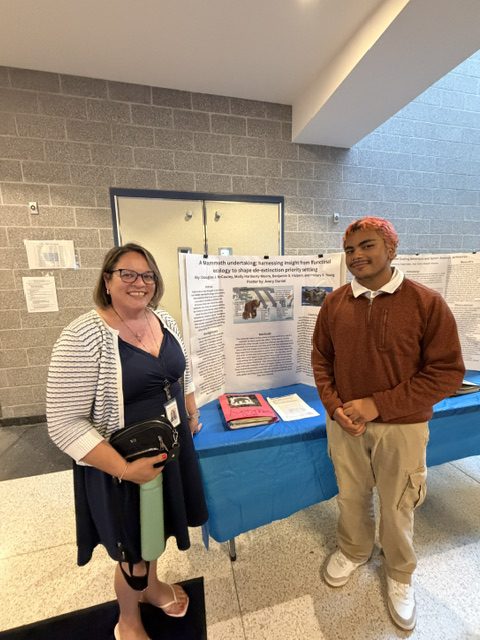
The Science Research program is a three-year course that students typically begin in their sophomore year after being recommended by their teachers as freshmen. This year’s class consisted of 14 students, including two seniors, eight juniors, and four sophomores. The program was led for the first time by Cohoes High School chemistry teacher Alicia Tommasino.
This evening is truly about the students,” Mrs. Tommasino said. “They are the ones that choose their topics, reach out to their mentors, do the research, and plan the symposium.”
Looking to expand opportunities for students during her first year leading the program, Mrs. Tommasino encouraged participation beyond the walls of the high school. One of those opportunities was the University at Albany Science Research Symposium, held in February. Senior Ethan Beck was selected to compete and present his research before science educators and judges at the university. His project, Gene Expression Dynamics of CEBPG in Lens Fiber and Epithelial Cells of 3dpf Zebrafish, examined gene expression patterns that may help researchers develop non-invasive treatments for cataracts in humans. Ethan said the experience helped prepare him for presenting his work before family members, teachers, administrators, and community members at the school symposium.
Mrs. Tommasino hopes to continue encouraging students to share their research publicly in the future.
“I would like to make science fair and symposium participation an expectation for every student who completes a project,” she said. “It’s a great experience for them.”
The symposium highlighted a wide variety of research interests. Senior Amelia Cappabianca focused her project on microplastics and phytoremediation, while other students explored topics including emotional engagement in moral judgment, the effects of coaching styles on student mental health, proactive criminal thinking, the impact of armed conflict on adolescent development, oxidative stress in cells, the rate of diminishing returns in cardiac treatments, bacterial phages and antibiotic resistance, dopamine pharmacology, isotopic ratios in bivalves, de-extinction, synthetic webbing materials, and comparisons between gasoline and hydrogen combustion engines.
Reflecting on her first year leading the program, Mrs. Tommasino described the experience as both challenging and rewarding as she worked to balance the program’s traditions with her own expectations and goals. She noted that the students themselves left the greatest impression on her.
“The students continued to prove that when you are truly passionate about something, you are motivated to learn more about it,” she said. “Seeing them really immerse themselves into something they want and love to learn about was extremely rewarding. I was able to witness students have one-on-one conversations with experts in their field, and it was such an amazing experience seeing them in their element like that. I’m so proud of them.”